Farmhouse Decor for Beginners: Where to Start
A plain-language orientation to the farmhouse look: the six ingredients that make a room read as farmhouse and a four-step order for adding them with furniture, textiles and decor.

You do not need an old house in the country to enjoy farmhouse decor. The look is built from a handful of ordinary things: a pale, warm backdrop, honest wood, soft fabric and objects that look as if they get used. All of them fit a city home, a suburban house or a single room.
What trips most beginners up is the order. It is tempting to start with the small accents, because they are the fun part, and end up with a room full of little things and no calm underneath them. This guide explains what the style is made of and gives you a sensible sequence for adding it.
What makes a room read as farmhouse
Strip away the trends and six ingredients do nearly all the work. A room that has most of them will feel farmhouse even with nothing rustic on the walls.
- A warm white and neutral base. Creamy whites, oat, soft beige and warm gray on the largest surfaces, so the room feels light without feeling cold.
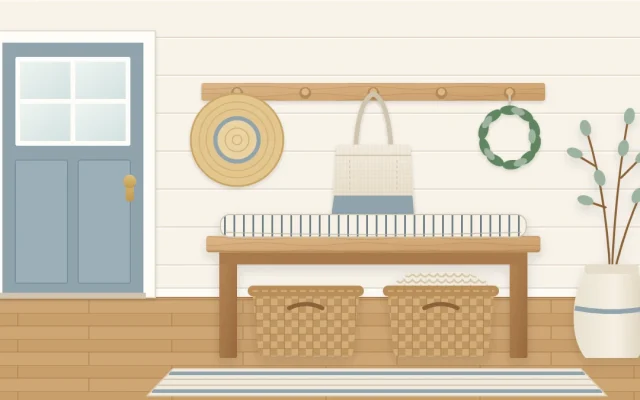
- Natural wood. A table, a bench, a frame or a bowl with visible grain. Wood is what stops a pale room from looking empty.
- Simple shapes. Straight legs, plain frames, rounded jugs. Nothing ornate, glossy or fussy.
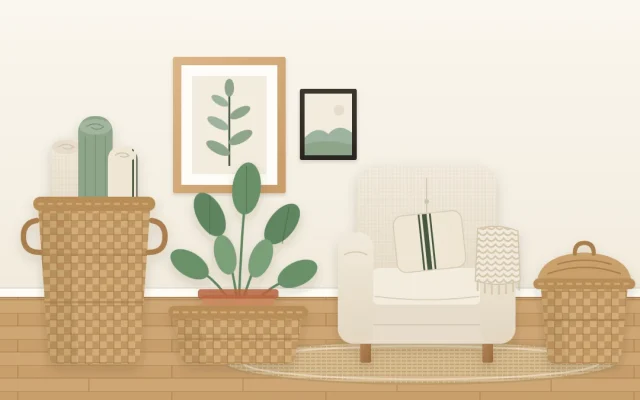
- Woven and linen textures. Baskets, jute, washed linen, cotton and chunky knits give a neutral palette something to catch the light.
- A few useful-looking objects. A pitcher, a crock, a wooden board, a stack of bowls. Things with a job, or the look of one, suit the style better than ornaments.
- Greenery. Branches in a jug, a potted herb or a few faux stems add the one living note every room needs.
The style lives in what you can move
Many pictures of farmhouse rooms feature planked walls, ceiling beams or a deep apron sink, and it is easy to conclude that the look depends on them. It does not. If your home already has features like these, treat them as a pleasant backdrop. If it does not, nothing is missing.
Everything in the list above is furniture, fabric or an object you can carry in through the front door. That is good news for anyone who simply wants to work with the rooms they have: plain painted walls and ordinary floors are a perfectly good starting point.
Step 1: Settle the palette
Begin with color, because every later choice depends on it. Look at what is already in the room and cannot easily change, such as the floor, the sofa and the wall color, and decide which warm white and which two or three neutrals sit comfortably beside them. Then pick a single quiet accent, perhaps sage green or a dusty blue, and a small amount of black for definition.
Keep fabric scraps and paint cards together in an envelope. Having the palette in your hand makes it far easier to say no to a pretty cushion in the wrong shade. The full method, including how undertones shift in daylight, is in the guide to building a farmhouse color palette.
Step 2: Add wood and texture
With the colors settled, look for flat spots: a smooth sofa against a smooth wall on a smooth floor. Each one is a place for wood or texture. A wooden coffee table or side table, a jute or flat-woven rug, linen cushion covers and a knitted throw change the feel of a room more than any number of small accessories.
Work on the biggest pieces first and repeat each material at least twice so it looks intended. One basket on its own can look stray; a basket, a woven tray and a rattan lampshade look like a decision. The living room is usually the easiest place to practice, and these farmhouse living room ideas show how the layers come together in one space.
Tip
Shop your own home first. A wooden board from the kitchen, a plain white pitcher or a basket from a closet may already be exactly the piece a shelf or table needs.
Step 3: Choose one or two character pieces
Character pieces are the things that give a room a story: a vintage-inspired bench, a large stoneware crock, a well-worn wooden stool, a window-style frame leaning on a console. They are what people remember about a farmhouse room, which is exactly why you need so few of them.
Give each one space. A single old-looking trunk beside a plain sofa looks collected. Five distressed pieces in the same view start to look like a set. If you prefer cleaner lines and more contrast, you may want even fewer of these and a little more black metal, which is the direction described in the guide to modern farmhouse style.
Step 4: Finish with walls and small accents
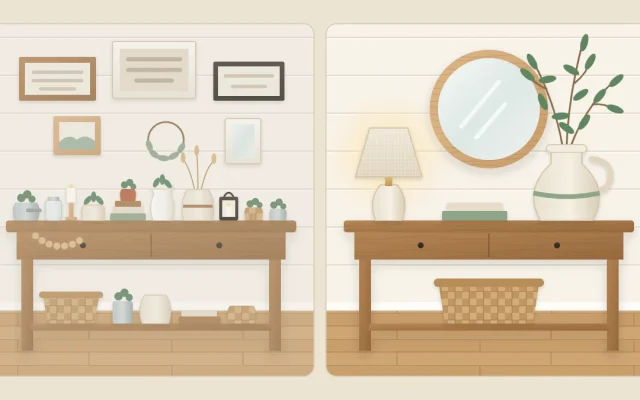
Only now is it time for the wall above the sofa and the tops of tables and shelves. Because the palette, the wood and the textures are already in place, you will need far less than you expect. One large simple artwork or a mirror often does more than a wall of small pieces, and a tray with a jug of stems and a couple of books is enough for most tabletops.
Add accents slowly, one at a time, and live with each for a few days before adding the next. Leave some surfaces completely clear. Empty space is part of the look, not a gap waiting to be filled.
Before you hang anything
Choose hardware to suit your wall type and the weight of the piece, and follow the manufacturer instructions that come with it. For a large mirror or anything heavy, get help if you are unsure.
How to tell when a room is finished
Stand in the doorway and let your eye travel around the room. It should have somewhere to rest: a stretch of plain wall, a clear end of a table, a sofa that is not buried in cushions. If everything is asking for attention at once, take three things away and look again.
It also helps to know the usual traps before you fall into them. Too many small accessories, a word sign on every wall and wood tones that fight each other are the most common, and each has a simple fix. The list of farmhouse decorating mistakes works as a quick checklist whenever a room feels slightly off and you cannot say why.
Frequently asked questions
Can I use farmhouse decor in a city home or a newer house?
Yes. The look comes from a warm neutral palette, natural wood, linen and woven textures and a few practical objects, all of which are furniture and decor. Plain painted walls and ordinary floors make a perfectly good backdrop, so the age or type of the building does not matter.
What should I get first when starting with farmhouse style?
Start by deciding on colors, not by collecting accessories. Once you know your warm white, your neutrals and your one accent, the most useful first additions are large textured pieces such as a woven rug, linen cushion covers, a wooden table or a big basket. Small accents come last.
How many rustic or vintage-looking pieces does a room need?
Fewer than most people expect. One or two character pieces per room, such as a worn wooden stool or a large stoneware crock, are usually enough. Surround them with plain, simple furniture so they stand out. When every piece looks aged, none of them reads as special.