Farmhouse Living Room Ideas for a Warm, Relaxed Room
Twelve original ideas for a welcoming farmhouse living room, grouped by effect: soften, warm up, add character and keep it calm, with a short guide to choosing where to begin.
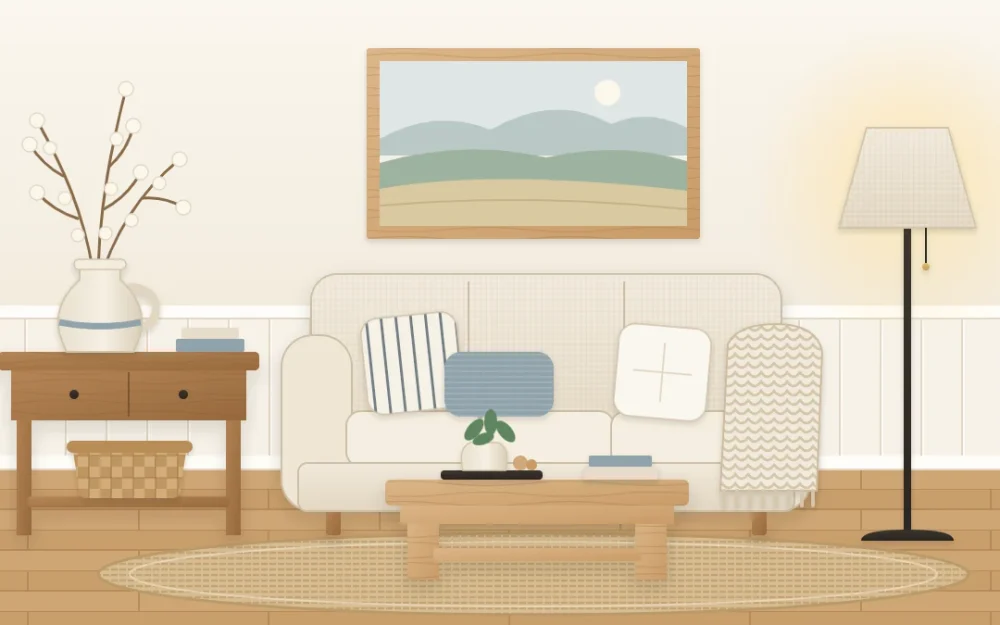
The best farmhouse living room ideas have one thing in common: they make a room easier to sit down in. Nothing is too precious to use, the sofa invites you to put your feet up, and the things on display look as if they belong to the people who live there.
The twelve ideas below are grouped by what they do for a room, so you can go straight to the effect yours is missing. You do not need all of them. Three or four, chosen well, are usually enough to shift a room from staged to welcoming.
Soften the room
1. Choose slipcover-style or linen upholstery
A sofa in washed linen or a loose slipcover-style cover sets a relaxed tone for everything around it. The slight rumple is the point: it tells people the room is for sitting in. If a different sofa is not an option, a large linen or cotton throw tucked over the seat cushions gives a similar effect.
2. Layer cushions in related fabrics
Use fewer cushions than you think, in a mix of sizes and textures instead of a matching set. Two larger plain ones, a stripe and one smaller knitted or woven cover is plenty for most sofas. Keeping them within the same two or three colors lets the textures do the talking.
3. Drape one chunky throw
A heavy knitted throw over one arm of the sofa, or folded in a basket, adds the deepest texture in the room for very little effort. One is enough. Draped loosely, it looks used; folded too neatly, it looks like a display.
Warm it up
4. Put a wooden coffee table at the center
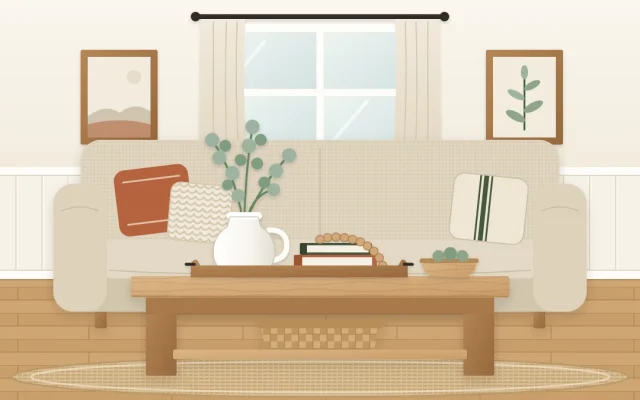
Wood in the middle of the seating area warms the whole group, because every seat looks onto it. A chunky, simple shape with visible grain suits the style better than anything glossy. Gather a few things on a tray so the top stays useful; the guide to farmhouse coffee table styling has a formula for that.
5. Lay a jute or flat-woven rug
A natural-fiber rug adds a broad stretch of texture underfoot and ties the seating together. As a rule of thumb, choose one large enough for at least the front legs of the sofa and chairs to rest on it, so the furniture reads as one group and not as separate islands.
6. Light with lamps, not only from the ceiling
Two or three plug-in lamps with fabric shades, placed at different heights, give a softer evening light than a single overhead source. A table lamp beside the sofa and a floor lamp in a corner are a good start. Linen or cotton shades spread a warm glow that flatters wood and pale walls.
Add character
7. Bring in one vintage-inspired piece
A wooden trunk, a well-worn stool used as a side table or an old-looking cabinet gives the room a sense of having been gathered over time. Limit it to one or two, and set each beside something plain. The contrast is what makes it stand out, as explained in the guide to mixing modern and rustic decor.
8. Arrange a simple mantel or console
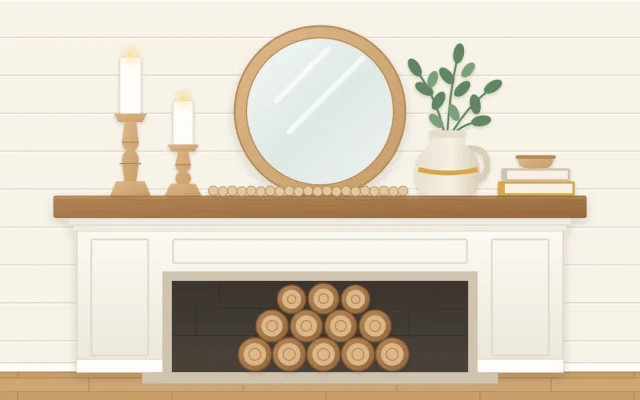
Every living room benefits from one composed spot. A mantel shelf, a console behind the sofa or the top of a low cabinet can hold a leaning mirror or artwork, something tall on one side and a lower group on the other. Keep it to five or six objects; the method is set out in the guide to farmhouse mantel decor.
9. Set a basket by the sofa
A large woven basket on the floor is storage and decoration at once. Filled with rolled throws or spare cushions, it adds a rounded, handmade shape among all the straight lines of furniture. It also gives everyday clutter somewhere to go quickly when guests arrive.
Keep it calm
10. Hold to a restrained palette
Warm white, two or three neutrals and one muted accent are enough. When color stays quiet, the grain of wood and the weave of fabric become the interest, which is where the layered look comes from. The guide to farmhouse textures shows how to build that depth without adding color.
11. Put greenery in a plain jug
A handful of branches or leafy stems, fresh or faux, in a white or stoneware jug does more than several small arrangements dotted around. Go taller than feels natural: a generous, loose bunch on a console or side table brings height and a living note to a neutral room.
12. Leave some space empty
A bare stretch of wall, a clear end of the coffee table and an uncluttered corner give the eye a rest and make the pieces you have chosen look more deliberate. If a surface feels busy, remove a third of what is on it and see whether you miss anything a week later.
Where to begin
Choose by what bothers you most about the room as it is now.
- It feels stiff or formal: start with the softening ideas, 1 to 3. Fabric changes the mood faster than anything else.
- It feels cold or echoing: go to ideas 4 to 6. Wood, a rug and lamp light add warmth you can see and hear.
- It feels bland: ideas 7 to 9 give the room a focal point and a piece with a story.
- It feels busy: ideas 10 to 12 are about taking away, which is often the quickest fix of all.
Begin with the largest change in your chosen group, live with it for a week or two, then add the next. A living room that comes together gradually tends to look more settled than one finished in a day, and you will find out along the way which ideas you never needed.
Tip
Sit in every seat before you call the room done. Each one should have a surface within reach for a cup, a lamp nearby for reading and something pleasant to look at.
Frequently asked questions
How do I make a living room look farmhouse without replacing the sofa?
Work around it with textiles and wood. A large linen or cotton throw over the seat, cushion covers in neutral textures, a woven rug, a wooden coffee or side table and a basket of blankets will shift the mood of the room while the sofa itself stays exactly as it is.
What kind of rug suits a farmhouse living room?
Natural-fiber and flat-woven rugs are the usual choice: jute, a cotton flat weave or a wool rug in a quiet stripe or plain neutral. Pick a size generous enough for the front legs of the seating to rest on it, which helps the furniture read as one group.
How many decorative accessories should a farmhouse living room have?
There is no fixed number, but fewer and larger usually looks better than many and small. One composed arrangement on a mantel or console, a gathered group on the coffee table and a jug of greenery are often enough. Leave some surfaces and at least one wall clear.