Farmhouse Kitchen Decor Ideas: Warm Touches for Counters, Shelves and Walls
Ten decor-only ways to warm up an ordinary kitchen, from leaned cutting boards and a crock of spoons to tea towels and a counter lamp, plus how to pick three or four and stop.
You can bring farmhouse warmth into a perfectly ordinary kitchen without touching a single cabinet. The look comes from a few honest materials, wood, stoneware, linen and something green, set against whatever surfaces you already have.
That is good news, because farmhouse kitchen decor is mostly made of things a kitchen needs anyway: boards, spoons, towels, a fruit bowl. The ten ideas below are decor only. Choose three or four, set them out with care, and stop there.
On the counter
1. Lean wooden cutting boards at the back
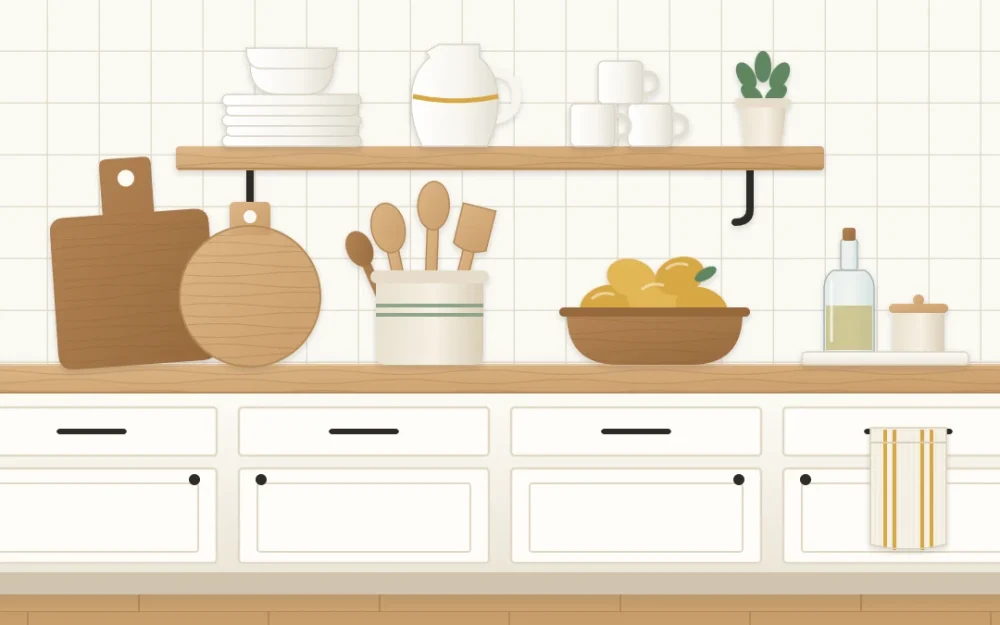
Two or three boards in different shapes, leaned against the backsplash, add the warmth of wood exactly where a kitchen is hardest and shiniest. Overlap them, tallest at the back, and stand a small crock or jar in front. Keep them, like everything else here, well clear of the cooktop.
2. Fill a crock with wooden utensils
A stoneware crock of wooden spoons is the most useful decoration a kitchen can have. Limit it to wood and one or two dark metal pieces; bright plastic tools live in a drawer. A crock roughly 6 to 7 in (15 to 18 cm) tall holds full-length spoons without tipping them out.
3. Gather oils and salt on a tray
Bottles scattered beside the stove look like mess. The same bottles on a small wooden or marble-look tray look like a station. Add a salt cellar and a pepper mill and nothing else.
4. Keep a bowl of fruit in view
A wide wooden or cream ceramic bowl of lemons, apples or pears is the easiest color in the room. One kind of fruit at a time looks more deliberate than a mix.
5. Add a small pot of herbs
A pot of basil, rosemary or thyme near the window brings in a living green that no object can copy. Slip the plastic pot inside a stoneware or terracotta one and stand it on a saucer.
These five are about what to choose. For where each piece goes, how to group them and how much counter to leave empty, see the guide to farmhouse kitchen counter styling.
Soft things: towels and a runner
6. Hang striped or checked tea towels
Textiles are the fastest change you can make. A ticking stripe or a small check in one color on cream, folded in thirds over the oven rail or looped through a drawer pull, softens a whole run of cabinets. Two matching towels look calmer than four different ones.
7. Lay a runner on the floor
A flat-woven runner in front of the sink brings pattern to the one large surface that usually has none. Choose a washable one, follow its care label, and lay it over a rug pad so it stays put. Muted stripes or a faded traditional pattern hide everyday marks better than plain cream.
Shelves and walls
8. Put everyday stoneware on display
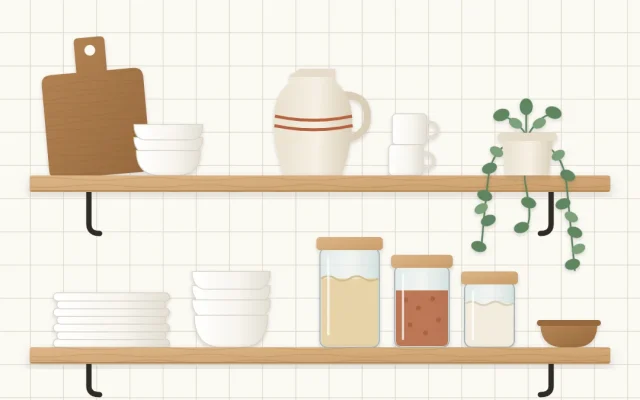
If you have an open shelf, a glass-front cabinet or even the top of a low cupboard, stack white and cream dishes where you can see them. A pile of bowls and a pitcher or two is decoration you also eat from. The method for arranging them is in the guide to styling open kitchen shelves.
9. Hang one simple wall piece
Kitchens have little free wall, so one piece is enough: a framed botanical sketch, a round wooden board, a small wreath of greenery, a vintage-inspired clock. Keep it away from steam and splashes.
Before you hang anything
Choose the fixing for your wall type and the weight of the piece, and follow the manufacturer instructions. Tiled walls and the areas around a range need extra thought, so pick a plain painted wall where you can.
10. Stand a small lamp on the counter
A little lamp with a warm bulb in a dark corner of the counter makes a kitchen feel like a room rather than a workspace, especially in the evening. Use a plug-in lamp near an existing outlet, with the cord kept away from the sink and cooktop, or a rechargeable one that needs no cord at all.
How to choose three or four and stop
Ten ideas in one kitchen would be a shop display. A simple way to choose is to take one from each of these groups:
- Something wood: the boards, the fruit bowl or the tray.
- Something ceramic: the crock or the stacked dishes.
- Something soft: the towels or the runner.
- Something living or lit: the herbs, the fruit or the lamp.
Set those four out and live with them for a week before adding anything. If a counter still looks empty, enlarge what is already there, a bigger bowl or a third board, rather than bringing in a new kind of object.
Tip
Clear first, then decorate. Put away the appliances you use less than once a week, and the pieces you add will have room to be noticed.
Keep the colors quiet
Farmhouse kitchens look settled because the decor shares a short palette: white or cream, natural wood, one soft color such as sage or faded blue, and a small amount of black. Repeat the soft color at least twice, for example in the towel stripe and the runner, so it looks chosen.
Work with the cabinets you have. Warm wood cabinets want more white and cream on top of them; white cabinets want more wood and a little black. For help settling on the accent, see how to build a farmhouse color palette.
Carry the look to the table
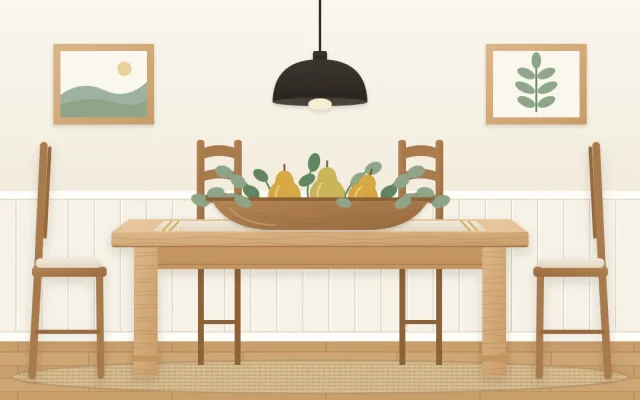
If the kitchen has a table or an island with stools, treat it as part of the same picture. A linen runner, a jug of branches or a wooden bowl repeats the materials from the counter and ties the room together. There are simple arrangements to copy in these farmhouse table centerpiece ideas.
What this guide leaves alone
Everything above sits on, leans against or hangs beside what is already in your kitchen. Changing cabinets, counters or the sink is a different kind of project and outside this guide, and anything that touches the home’s wiring, including new fixed lighting, is a job for a licensed electrician.
Decor has limits, and that is fine. It cannot change the layout, but it can change how the room feels when you walk in to make coffee, which is most of what people mean by a farmhouse kitchen.
Frequently asked questions
Can a modern kitchen take farmhouse decor?
Yes. Flat-front cabinets and plain counters are a quiet background, and wood, stoneware and linen show up clearly against them. Keep the pieces simple and few, repeat one soft color, and add a little black so the decor connects with modern handles and appliances.
How do I keep decorated counters from getting in the way of cooking?
Keep decor to the edges and corners and leave the main work area between sink and cooktop empty. Choose pieces you actually use, such as boards, a utensil crock and a fruit bowl, and gather small items on a tray so they move in one lift when you need the space.
What colors suit a farmhouse kitchen?
A short, quiet palette works best: white or cream, natural wood tones, one muted color such as sage green or faded blue, and a small amount of black in metal or frames. Repeating the muted color in two or three places makes it look intentional.