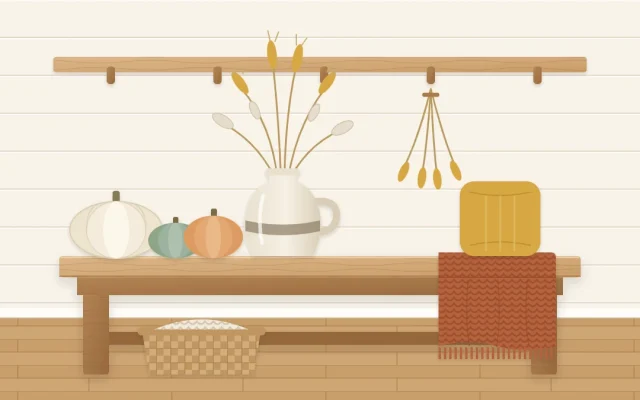
Spring Farmhouse Decor: Fresh, Light Updates for the Season
A swap-based approach to spring: lighter textiles, branches and potted bulbs, soft green with one pale accent, and surfaces cleared by a third. Includes quick room-by-room notes and a one-box storage plan.
By the end of winter a farmhouse room can feel weighed down: thick knits on every chair, dark accents, surfaces that filled up over the holidays and never quite emptied. The fix is not a cupboard full of seasonal decorations.
The best spring farmhouse decor is mostly a matter of swapping. Heavy things go out, light things come in, and about a third of what is on display takes a rest. Work through the swaps below and the house will feel fresher by the weekend.
The swap list at a glance
| Put away | Bring out | Where it shows most |
|---|---|---|
| Chunky knit and fleece throws | One light cotton or linen throw | Sofa arm, end of the bed |
| Dark or velvet cushion covers | Linen and cotton covers in cream, oat and soft green | Sofa and armchairs |
| Dried winter stems and evergreen | Flowering or budding branches, simple flowers | Entry table, dining table |
| Heavy table runner | Bare wood or a light cloth | Kitchen and dining tables |
| Winter wreath | A simple green wreath | Front door or entry wall |
Lighten the textiles first
Fabric covers more of a room than any ornament, so this swap makes the biggest difference. Fold away the thickest throws and the darkest cushion covers, and replace them with linen and cotton in pale neutrals. You do not need new cushions, only a second set of covers.
Keep one lighter throw within reach, because spring evenings are still cool. If the room allows it, thinner curtains or simply pulling the existing ones fully back lets in the longer daylight. Wash or air what you are putting away, following the care labels, so it is ready for fall.
Bring in branches, bulbs and simple flowers
Spring is the one season when a single living thing on a table does more than any arrangement of objects.
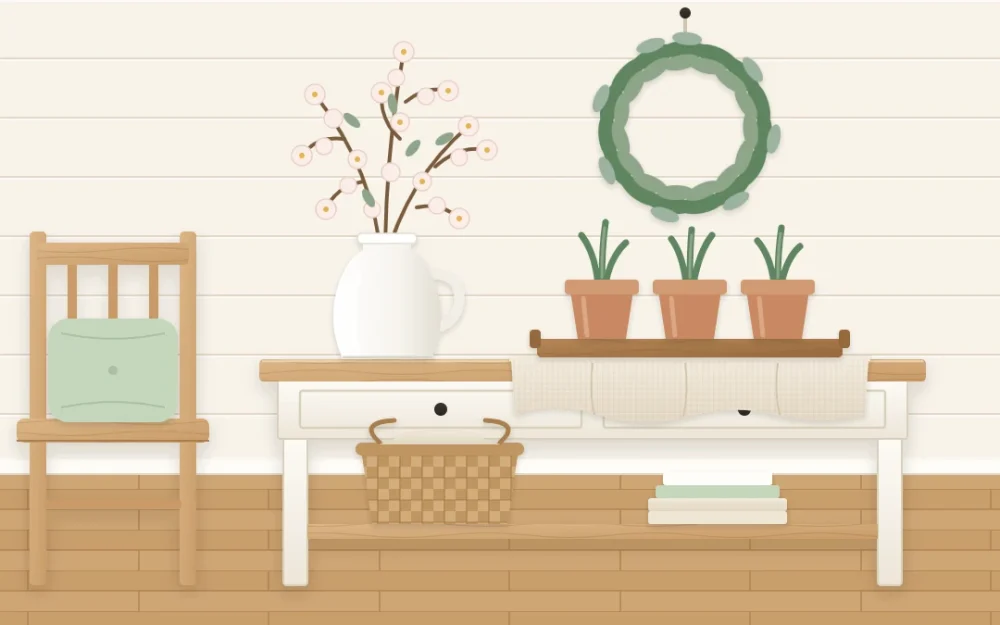
- Branches: a few tall budding or flowering branches in a white jug or stoneware crock give height and movement with almost no effort. Faux branches work too if you prefer something that lasts.
- Bulbs in pots: small terracotta pots of spring bulbs, lined up in a row of three on a wooden tray, look fresh from the first green shoots onward. Set a saucer or liner under each pot to protect the wood.
- Simple flowers: one kind of flower in one container is more farmhouse than a mixed bouquet. Tulips in an enamel-style pitcher or a handful of garden stems in a glass jar is all it takes.
Keep stems loose and slightly uneven. A too-perfect arrangement looks formal, and the point here is ease.
Add soft green and one pale accent
Leave the neutral base of the room alone and layer two colors over it. Soft green comes first: sage, moss or a gray-green in a cushion cover, a tea towel, a ceramic pot. It echoes the plants and ties them into the room.
Then choose one pale accent and stay with it. Butter yellow, blush, pale blue and lavender-gray all work, but one at a time. Repeat it in two or three small places, such as a cushion, a jug and a stack of napkins, so it reads as a choice.
Tip
If you are unsure which accent to pick, look at the flowers you are most likely to bring home this month and match the accent to them.
Clear surfaces by a third
Spring rooms need air around things. Go to each surface in turn, such as the console, the coffee table, the open shelves and the kitchen counter, and remove roughly one object in three. Start with anything dark, anything small and anything that was only there for winter.
What remains should have visible space on either side of it. If a surface now looks bare, resist refilling it for a few days. An empty stretch of wood in good light is part of the look.
Room by room, in brief
Entry
Swap the winter wreath for something simple and green, or refresh the base you already have with new stems; the DIY farmhouse wreath guide shows how to build one that can be changed with the seasons. On the console, a jug of branches, a tray of potted bulbs and a light cloth are enough. Clear away the pile of winter hats and gloves into a basket.
Before you hang anything
Choose a wreath hanger or hook to suit the door type or wall type and the weight of the wreath, and follow the manufacturer instructions for whatever you use.
Living room
Change the cushion covers and the throw, move the heavy blanket basket out of the main view, and put one green thing on the coffee table. If dark winter accessories are still on the shelves, trade them for white ceramics, glass and a small plant.
Kitchen table
A bowl does most of the work here. Fill a wooden or stoneware bowl with lemons for color, or with decorative eggs, wooden or ceramic, kept purely for display. For anything more built up, these farmhouse table centerpiece ideas show how to keep it low enough to talk across.
Bedroom
Take the heaviest layer off the bed and fold a lighter quilt or cotton blanket across the foot. Change one or two pillow covers to the pale accent, and set a small jug with a few stems on the nightstand or dresser.
Store the off-season pieces in one box
Everything you took out should fit into a single lidded box or basket: the heavy cushion covers, the dark accents, the winter stems worth keeping. One container sets a natural limit on how much seasonal decor you own, and it makes the next change quick.
Put a short list inside the lid of what is in the box and which room each piece came from. When the days shorten again, the same box comes back out, and the linen covers and pale accents go in. The guide to fall farmhouse decor picks up from there with warmer layers and dried stems.
Frequently asked questions
How do I decorate for spring without buying a lot?
Swap instead of adding. Put away heavy throws and dark cushion covers, bring out linen and cotton, and clear about a third of what sits on your surfaces. Then add one living thing per room, such as branches in a jug or a pot of bulbs. Most of the change comes from removing, not buying.
What colors suit a farmhouse room in spring?
Keep the usual base of warm white, cream and natural wood, then add soft green in a few places and one pale accent such as butter yellow, blush or pale blue. Using a single accent in two or three spots looks calmer than several pastel colors at once.
When should I switch from winter to spring decor?
There is no fixed date. A practical cue is when the daylight noticeably lengthens and heavy throws start to feel like too much. Change textiles and surfaces first, and keep one lighter throw out for cool evenings. You can make the swap in stages over a couple of weekends.