Mason Jar Decor Ideas: Simple Farmhouse Accents From Glass Jars
Quick decorative uses for empty glass jars: simple vases, a twine-wrapped jar with steps, painted and tinted finishes, seasonal fillers, holders and soft flameless light.
At a glance
- Difficulty
- Easy
- Time
- About 20 to 40 minutes, plus drying time for glue or paint
- Best for
- Tables, shelves and windowsills that need a small accent
- Look
- Simple, light, handmade and rustic
What you need
- Clear glass jars
- Jute twine
- Craft glue and a small brush
- Strip of linen
- Scissors
- Fresh, faux or dried stems
A clear glass jar is about as plain as an object gets, which is exactly why it suits a farmhouse room. It looks useful, it catches the light, and it goes with wood, linen and stoneware without competing with any of them.
If you have a few empty canning-style jars in a cupboard, these mason jar decor ideas turn them into quick accents for tables, shelves and windowsills. Most take a few minutes; the wrapped vase, with steps below, takes a little longer. A mason jar is the usual term for this kind of glass jar with a threaded neck, but any clean, clear jar works.
Jars as Simple Vases
The quickest use needs nothing but water and stems.
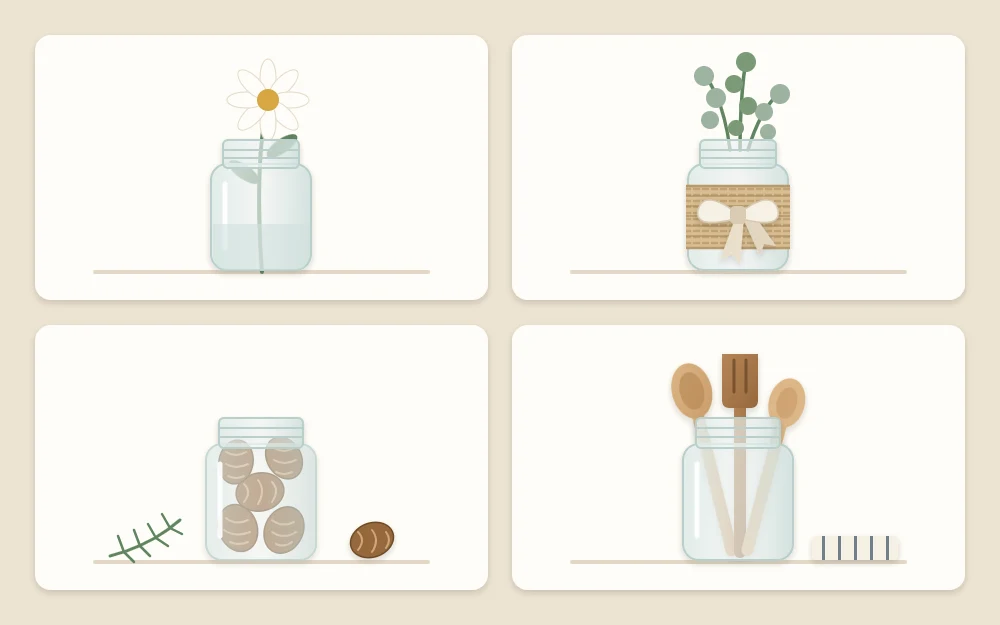
- A single stem. One branch, one garden flower or one sprig of greenery in a small jar looks deliberate on a nightstand, a windowsill or a bathroom shelf.
- A small bunch. Cut stems short, so the flowers sit just above the rim. A low, full bunch looks more generous than a few tall stems leaning to one side.
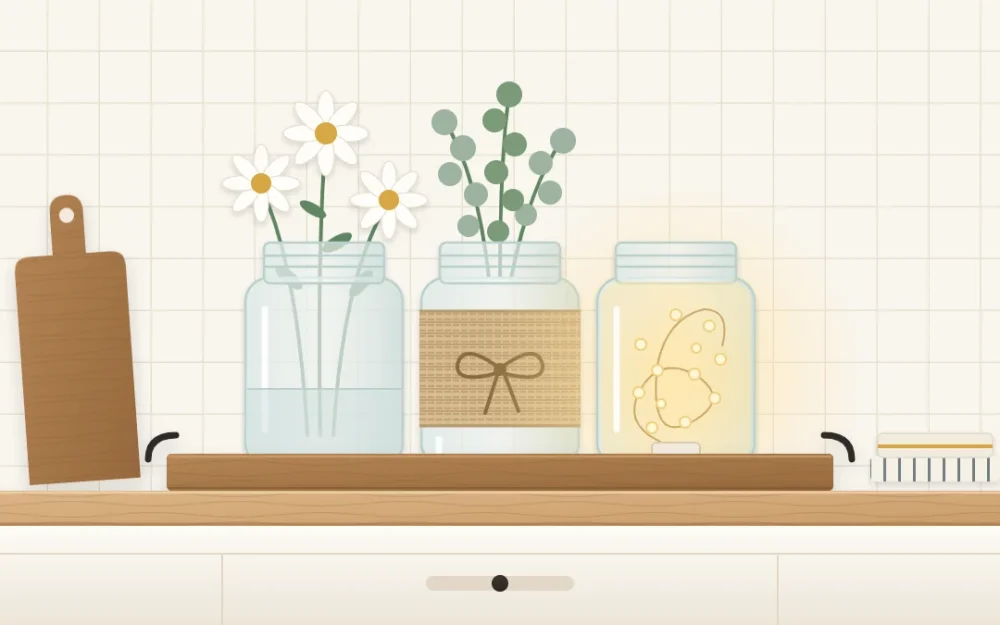
- A row of three. Line up three jars down the middle of a table, each with a few stems of the same flower or green. Use three matching jars for a calm look or three different heights for a looser one.
The row of three is one of the easiest centerpieces there is; for other shapes and occasions, see these farmhouse table centerpiece ideas.
How to Make a Twine-Wrapped Jar Vase
Twine adds the rough texture that smooth glass lacks. You need a clean, dry jar, jute twine, craft glue, a small brush and scissors.
- Decide how much to cover. A band around the middle, the lower half only, or just the neck. Leaving some glass showing keeps the jar looking light.
- Glue a narrow strip. Brush glue around the jar in a band about 1 in (2.5 cm) deep where the wrap will begin.
- Start the twine. Press the end flat against the glass and wind the first turn over it so the end is hidden.
- Wind upward. Keep each turn snug against the last with no glass showing between. Add more glue as you go, a strip at a time.
- Finish neatly. Cut the twine, dab glue on the end and tuck it under the previous turn at the back of the jar.
- Let it dry. Leave the jar until the glue has set before handling, then add a narrow strip of linen tied in a simple knot or bow if you like.
A hot glue gun is faster than craft glue, but the glue and the tip cause burns, so work carefully and keep your fingers back from the bead of glue.
For a quicker version, skip the glue and tie a strip of torn linen or several loops of twine around the neck. Wrapped bottles and other small makes are covered in this list of simple DIY farmhouse projects.
Tinted and Painted Jars
Color changes a jar from a container into an ornament. Matte paint in warm white, cream or soft sage gives a solid, pottery-like finish. A thin wash of glass paint gives a sheer tint that still lets light through, which is pretty on a windowsill.
Apply paint to the outside only, in thin coats, in a ventilated room and according to the product label. Raised lettering or patterns on the glass will show through nicely if you wipe the paint back from them with a damp cloth before it dries.
Good to know
Painted, tinted, glued or otherwise decorated jars are for display only. Do not use them for food, drinks or canning, and keep a separate set of plain jars for the kitchen.
Jars With Seasonal Fillers
A jar filled to the top with one thing has a quiet, pantry-shelf appeal. Choose a single filler per jar and repeat it across two or three jars.
- Pine cones in winter, on their own or with a short string of wooden beads coiled among them.
- Lemons in spring and summer, as a display to look at, not a way to store fruit you plan to eat.
- Dried beans, split peas or pebbles as a base that holds faux or dried stems upright without water.
- Acorns, small faux pumpkins or dried seed heads in autumn. These sit well among the layers described in the guide to warm, natural fall farmhouse decor.
- Shells or sea glass gathered on a trip, kept as a small memory on a shelf.
Jars That Hold Things
A wide-mouth jar earns its place when it does a job. A plain, undecorated jar holds wooden spoons and spatulas on a counter, well clear of the cooktop. In a craft corner or on a desk, jars keep paintbrushes, pencils and scissors upright and visible.
In a bathroom, smaller jars suit cotton balls and swabs. Group two or three on a small wooden tray so they look like a set instead of scattered containers, and choose jars of the same style.
Jars With a Soft Glow
Glass and warm light belong together. The simplest version is a flameless LED tea light dropped into the bottom of a jar; a thin layer of sand, coarse salt or dried beans steadies it and hides the base. Three glowing jars on a tray make a gentle evening centerpiece.
A short battery-operated string of warm white micro lights coiled inside a jar gives a brighter sparkle. Use and place light strings according to the manufacturer instructions, and keep the battery pack where you can reach the switch. Flameless lights are the sensible default here, particularly near dried fillers and twine; real candles do not belong in wrapped jars or beside dried materials.
Keeping Jar Decor in Proportion
Jars are easy to collect and easy to overuse. If they start to feel like a theme, a few checks bring them back into balance.
- Too many in one room? Keep one group of three, or two single jars in different spots, and put the rest away.
- Looking cluttered? Stand the jars on a tray or board so they read as one arrangement.
- Looking flat? Pair glass with something matte and solid, such as a stoneware jug or a wooden bowl.
- Too many finishes? Choose one treatment per group: all clear, all wrapped or all painted.
Frequently asked questions
Can I still use a jar for food after decorating it?
No. Once a jar has been painted, tinted, glued or wrapped, treat it as an ornament and keep it for display. Craft paints and glues are not made for contact with food or drink, and decorated jars should not be used for canning. Keep plain, undecorated jars for kitchen use.
How do I remove the label and glue from an old jar?
Soak the jar in warm, soapy water until the paper softens, then peel and rub it away with a cloth. Sticky patches usually loosen when rubbed with a little cooking oil and washed again. Dry the glass completely before you wrap or paint it, because glue and paint grip poorly on a damp surface.
How many jars should I group together?
Three is the easiest number to arrange, either in a row down a table or clustered on a tray. A single jar works on a small surface such as a nightstand. Beyond one group per room, jars begin to look like a collection, so store the extras and rotate them with the seasons.