Farmhouse Bedding: How to Layer a Bed With Linen, Quilts and Knit Throws
A clear layering order for a relaxed farmhouse bed, from the fitted sheet to the last accent pillow, with advice on mixing textures, choosing two or three neutrals and adjusting the layers by season.
At a glance
- Difficulty
- Easy
- Time
- About 10 to 15 minutes once you have the layers
- Best for
- Any bed you want to look layered and relaxed
- Look
- Soft, neutral and gently rumpled
What you need
- White fitted and flat sheets
- Duvet or comforter in cream or oat
- Quilt or coverlet
- Chunky knit throw
- Two sleeping pillows
- Two striped or checked shams
- One accent pillow
The relaxed, layered bed is the heart of a farmhouse bedroom, and it looks more complicated than it is. Good farmhouse bedding is four or five plain layers in a set order, in two or three quiet colors, with texture doing the decorating.
Work from the mattress outward, then from the back of the bed to the front. Once you know the sequence, making the bed takes a few minutes, and changing it for the season means swapping one or two layers instead of starting over.
Choose tones and textures before you buy or dig through the closet
Limit the bed to two or three neutral tones: white for the sheets, a cream or oat for the largest layer, and one deeper shade such as flax, warm gray or soft sage. Then allow yourself a single pattern, a narrow stripe or a small check, and use it in one place only, usually the shams or the quilt.
Texture is what stops a neutral bed from looking flat. Aim for four that feel different under your hand:
- Washed linen or a linen blend, slightly rumpled and matte. Linen is woven from flax, which gives it that dry, textured surface.
- Smooth cotton for sheets and pillowcases.
- A quilted layer with visible stitching.
- A chunky knit for the throw.
For how these materials play against wood, wicker and stoneware in the rest of the house, see the guide to farmhouse textures and natural materials.
The layering sequence, from mattress to throw
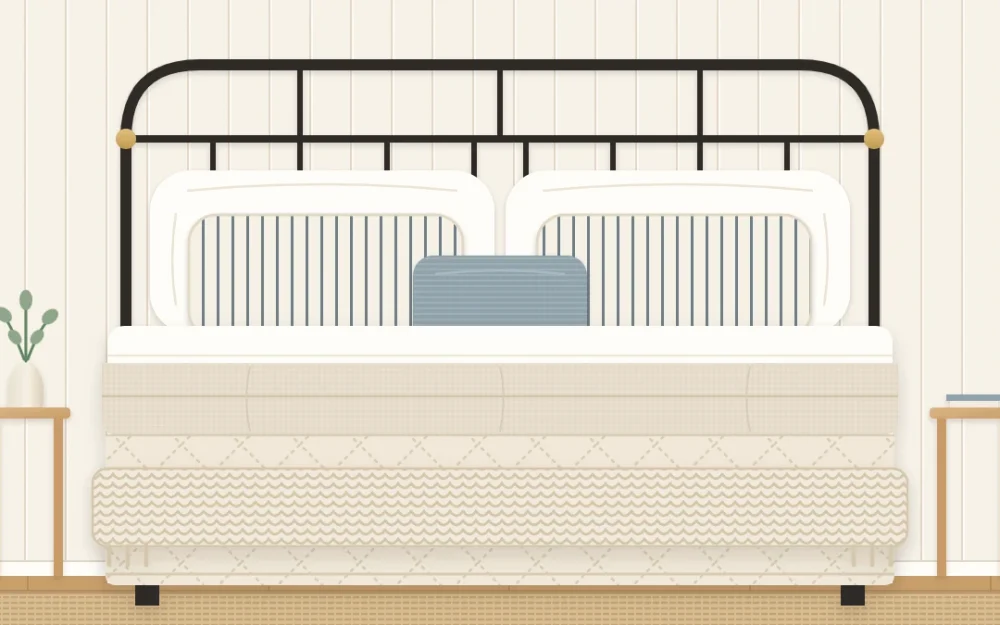
- Fitted sheet. Pull it tight at all four corners. A smooth base makes every later layer sit better.
- Flat sheet. Lay it finished side down with the wide hem at the head of the bed. When you fold it back later, the good side shows.
- Duvet or comforter. Pull it up to the pillows, then fold the top edge back by about a third, taking the flat sheet with it so a band of white shows. In warm weather, fold the duvet in thirds across the foot of the bed instead.
- Quilt or coverlet. Fold it in half or in thirds lengthwise and lay it across the lower half of the bed, over the duvet. Its edge should run straight from side to side.
- Throw. Fold the knit throw into a long band and lay it across the foot, on top of the quilt, or drape it loosely over one corner.
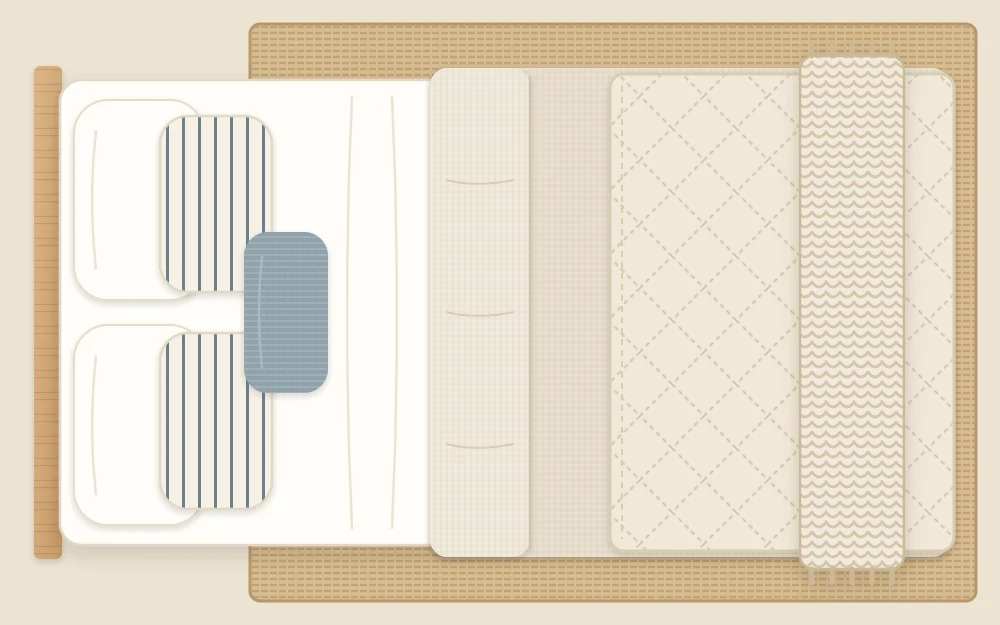
The principle behind the order is simple: each layer stops a little short of the one below, so you see a strip of everything. If a layer disappears completely, either fold it back further or leave it off.
Pillows, from back to front
Pillows follow the same stepped idea, with the largest at the back.
- Sleeping pillows go first, in plain white or cream cases, standing against the headboard or lying flat.
- Shams come next and lean against the sleeping pillows. This is the best place for your stripe or check.
- Accent pillows finish the front: one long lumbar pillow, or one or two small squares in the deeper tone.
A sensible count for a queen bed is two sleeping pillows, two shams and one accent. A twin needs one of each. A king can take three shams across the width. If clearing the bed at night takes more than a few seconds, you have too many.
Tip
Give the extra pillows a home before you add them. A basket or bench at the foot of the bed keeps them off the floor, and it is one of the simplest farmhouse bedroom ideas to borrow.
Lighter and heavier versions by season
The sequence stays the same all year. Only the weight of each layer changes.
| Layer | Warm months | Cold months |
|---|---|---|
| Sheets | Linen or crisp cotton | Brushed cotton or flannel |
| Main layer | Thin cotton coverlet used alone | Duvet with a heavier insert |
| Quilt | Lightweight quilt folded at the foot | Thicker quilt over the lower half |
| Throw | Cotton or gauze throw | Chunky wool-blend knit |
In summer you can drop a layer entirely and let the folded quilt stand in for the duvet. In winter, add warmth under the visible layers, with a blanket between the flat sheet and the duvet, so the look stays the same.
Relaxed, not messy
The farmhouse bed is meant to look slept in and cared for at once. A few habits keep it on the right side of that line.
- Keep fold lines straight. Wrinkled linen with a crisp, level fold looks intentional. A crooked fold looks unmade.
- Even the sides. Check that the duvet drops the same distance on both sides of the bed.
- Skip the iron on linen. Smooth it by hand while it is slightly damp from the wash if the care label allows, and let the rest of the creases be.
- Loosen one thing. A throw with one corner trailing is enough softness. If everything is casual, nothing looks deliberate.
- Stop at the bed. Layers on the bed look best when the surfaces beside it are calm, so keep the bedside table edited too. This guide to farmhouse nightstand styling shows how.
Looking after the layers
Follow the care label on every textile; linen, cotton, wool blends and quilted pieces often want different temperatures and drying methods. Wash a new colored piece on its own the first time if the label suggests it.
Shake the duvet and quilt out when you make the bed so the filling settles evenly. Store off-season layers clean, fully dry and folded in a cotton bag or a lidded basket. Keep heavy knit throws folded on a shelf as well, since a chunky knit can stretch out of shape when it is left on a hook.
Frequently asked questions
Does the quilt go over or under the duvet?
Either works, but for a layered look the quilt is usually folded and laid across the lower half of the bed on top of the duvet, so both stay visible. On warm nights you can reverse the idea: spread the quilt flat as the main cover and fold the duvet in thirds at the foot.
How many pillows should a farmhouse bed have?
Enough to look generous, few enough to clear quickly. For a queen bed, two sleeping pillows, two shams and one accent pillow is a comfortable starting point. A twin can use one of each, and a king can take three shams. Have a basket or bench ready for the extras at night.
Can I mix linen and cotton on the same bed?
Yes, and the contrast is part of the look. Smooth cotton sheets feel crisp against the skin while a washed linen duvet cover brings a matte, rumpled texture on top. Keep the colors close so the textures stand out, and check each care label, because the two fabrics may need different washing and drying.